
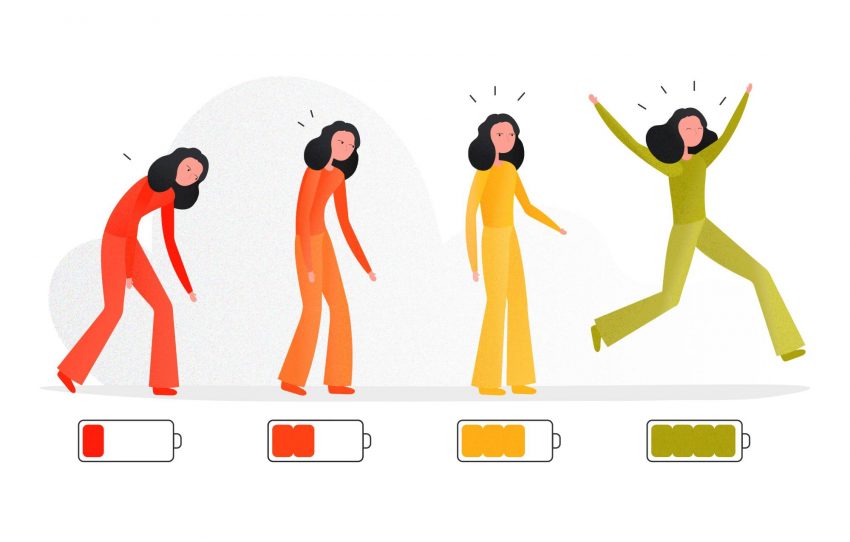
Some folks with scientific despair can’t get off the bed. However what about those that exhibit different indicators of despair who by no means cease shifting, and should double down on their work?
Psychiatrist Dr. Judith Joseph says the second group typically goes unnoticed, even by the folks dwelling it. She calls it “high-functioning despair”: individuals who maintain assembly their obligations at work and at residence whereas quietly dropping the power to really feel pleasure.
“If you end up joyful, you might have higher bodily well being, you might have higher relationships, you might have higher productiveness at work,” Joseph stated in an interview for the Your Flip podcast. “So why don’t we prioritize it?”
On the middle of Joseph’s work is anhedonia: a diminished potential to really feel pleasure, pleasure or curiosity in issues that when introduced these emotions. Joseph describes it as “the silent sister” of despair.
“One sister is depressed, and crying, and never getting off the bed, and getting all the eye,” she says. “The opposite one is quiet and numb.” Anhedonia could not seem to be a disaster within the traditional sense, Joseph says. “However it’s an existential disaster, and it’s not one thing to disregard.”
What the analysis reveals
In a peer-reviewed study revealed within the journal Cureus, Joseph and colleagues interviewed adults utilizing a set of questionnaires designed to evaluate high-functioning despair, trauma and anhedonia.
The outcomes supported the researchers’ speculation that folks with high-functioning despair have elevated ranges of anhedonia and trauma. Contributors with increased anhedonia scores additionally had increased high-functioning despair scores.
Mother and father and caregivers had the best anhedonia and high-functioning despair scores within the examine.
The authors be aware that high-functioning despair will not be an official analysis within the DSM-5, the handbook clinicians use to diagnose psychological well being circumstances. They are saying that’s a part of the issue: individuals who maintain functioning could not acknowledge their signs or search therapy till they attain burnout.
‘One thing’s gonna give’
Joseph says she typically sees the sample in girls who’re the regular presence for everybody round them. They’re so targeted on their tasks at work and at residence that they don’t notice they’re burned out, or near it.
“However ultimately one thing’s gonna give,” she stated. “Both they do break down and so they have a scientific despair and so they lose their functioning, they go into misery or disaster, or they bodily break down.”
She stated she has seen sufferers find yourself within the emergency room with out understanding why, solely to be taught that they had been carrying unresolved emotional ache.
Joseph stated the sample is frequent in professions that discourage vulnerability, together with her personal. In drugs, she stated, crying after a affected person died was seen as weak spot.
“In drugs, we concentrate on the disaster,” Joseph stated. “You’re [taught] to search for the mania, for the psychosis.” She believes there must be extra concentrate on anhedonia, the lack of sense of pleasure.
A self-assessment
Joseph developed an anhedonia quiz primarily based on the Snaith-Hamilton Pleasure Scale, a measure of the capability to really feel pleasure that was revealed within the British Journal of Psychiatry.
The questionnaire asks about on a regular basis experiences, akin to whether or not you might have bother having fun with reward, whether or not you savor your meals or different small pleasures, and whether or not you wrestle to get pleasure from your work or accomplishments as a result of they by no means really feel adequate.
The quiz will not be a diagnostic software. It’s an invite to take inventory of what is perhaps standing in the best way of a fuller, extra joyful life. If you happen to’d wish to take the quiz, you’ll be requested to share your e mail to see the outcomes.
5 V’s
In her ebook, “Excessive Functioning: Overcome Your Hidden Melancholy and Reclaim Your Pleasure,” Joseph additionally outlines a framework she calls the 5 V’s:
- Validation: naming and accepting what you are feeling.
- Venting: expressing feelings, by way of speaking, writing, inventive expression or perhaps a superb cry.
- Values: making time for what issues most.
- Imaginative and prescient: having one thing to look ahead to.
- Vitals: caring on your entire self (thoughts + physique) by way of sleep, diet and motion.
Joseph says anhedonia seems throughout many circumstances, in many individuals in midlife and different occasions, too. “It’s one thing that we have to discover ways to detect,” she stated, as a result of it may be a silent drawback.
If you happen to or somebody you understand is in disaster, name or textual content 988, to succeed in the Suicide & Disaster Lifeline
Wish to know extra? Observe the Your Turn newsletter and take heed to the Your Turn podcast on the NPR app or wherever you get your podcasts.
Transcript:
JUANA SUMMERS, HOST:
Midlife comes with a ton of challenges, and amongst them is the sensation of burnout – getting by way of the day however not essentially having fun with it. NPR’s Allison Aubrey, a number of Your Flip, joins us now to speak in regards to the analysis behind burnout. And stick with us as a result of she’s additionally sharing a software that may assist you perceive it. Hey there, Allison.
ALLISON AUBREY, BYLINE: Hello, Juana. Nice to be right here.
SUMMERS: So, Allison, I imply, after I take into consideration burnout, it looks like any sense of pleasure or surprise that we’d have, it actually simply has to take a backseat to that lengthy to-do listing that all of us have, all the things we now have to get performed day by day. There’s simply a lot taking place.
AUBREY: Yeah, that’s undoubtedly a part of it. I imply, we concentrate on our obligations at work and at residence. However for some folks, Juana, they quietly and slowly, perhaps with out noticing it, lose a way of pleasure. Dr. Judith Joseph, a psychiatrist who research this, factors to a time period for this – anhedonia. That is the shortcoming or diminished capability to expertise pleasure from issues which can be usually satisfying. And this will accompany what she calls high-functioning despair. Right here she is.
JUDITH JOSEPH: After I describe despair, I describe twin sisters. One sister is depressed and crying and never getting off the bed and getting all the eye, and the opposite one is quiet and numb, you understand? And she or he’s not in disaster within the traditional sense, however it’s an existential disaster. And it’s not one thing to disregard.
SUMMERS: Oh, OK, that’s an attention-grabbing strategy to describe it. So, Allison, is Dr. Joseph making the purpose that that quiet sister that she describes is straightforward to overlook?
AUBREY: Sure, it may be. She says she sees this in sufferers, together with many excessive achievers who really feel that they must be the rock for everybody else. They’re the individual holding it collectively, perhaps doubling down on work or caregiving or each. This typically is available in midlife. It may possibly come at any level, actually. They might not notice they’re burned out or emotionally flat. So Dr. Joseph’s peer-reviewed examine discovered that folks with what she calls high-functioning despair had increased ranges of anhedonia, and fogeys and caregivers scored highest. So she thinks there must be extra concentrate on all this.
JOSEPH: In drugs, we concentrate on the disaster. Like, oh, you must search for the mania, you must search for the psychosis. Anhedonia was by no means placed on a pedestal. And examine after examine reveals that when you’re joyful, you might have higher bodily well being, you might have higher relationships, you might have higher productiveness at work. You’re extra probably to assist the world. So why don’t we prioritize it?
SUMMERS: And Allison, I do know you’ve received a useful resource for us, a method for all of us to form of higher assess our emotional well being. Inform us about it.
AUBREY: Yeah, properly, Dr. Joseph developed a brief anhedonia quiz. It’s primarily based on a scientific software referred to as the Snaith-Hamilton Pleasure Scale. And questions embody issues like, is it onerous so that you can get pleasure from reward? Do you hardly ever savor your meals or different small pleasures? And this one received me considering, Juana. Do you discover it onerous to get pleasure from taking breaks since you really feel stressed once you’re not busy? I imply, typically…
SUMMERS: Oh, yeah.
AUBREY: …We’re so accustomed to being busy, after we do get a break, it could actually really feel like one thing’s lacking.
SUMMERS: This can be a acquainted one to me. Allison, if this quiz raises a flag for somebody, what subsequent?
AUBREY: Joseph says, perhaps it’s time to decelerate or reassess. She has a few easy steps you’ll be able to take to start out. The primary one is solely validation. You’re taking a second to call what you’re feeling, or not feeling, and you then vent about it. Venting doesn’t imply screaming, essentially, however moderately to discover a strategy to launch what’s been bottled up, Juana. So discuss to somebody. Perhaps have a superb cry. Begin journaling. Write a letter. Or perhaps simply discover one other inventive strategy to get it out. That is actually an invite to take inventory, Juana, of what is perhaps standing between you and extra pleasure.
SUMMERS: That was NPR’s Allison Aubrey. Good to speak with you.
AUBREY: Nice to speak to you, too, Juana.
SUMMERS: And you may join the e-newsletter at npr.org/yourturnnewsletter.