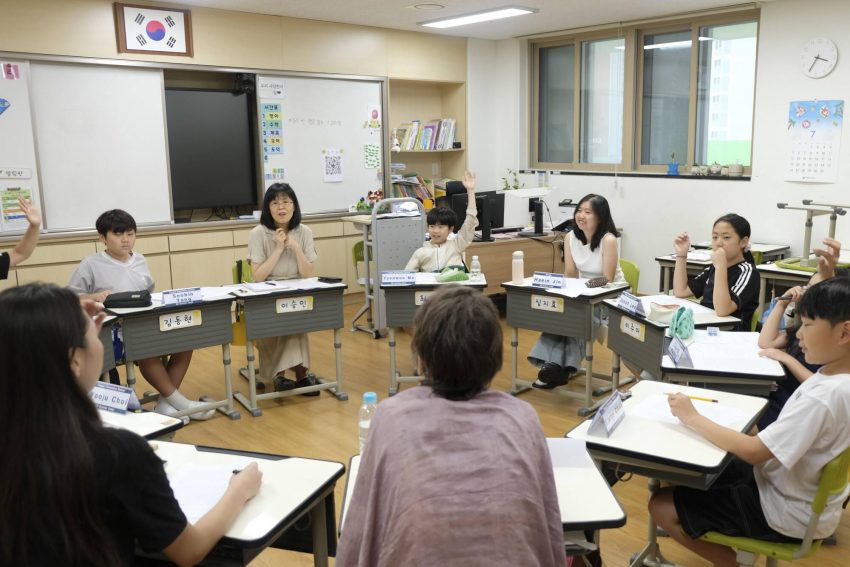
CHUNCHEON, South Korea — “Is the Frankenstein monster human?” a trainer asks college students on the Toegye public elementary faculty in Chuncheon metropolis, some 50 miles east of Seoul, as they talk about Mary Shelley’s novel Frankenstein.
“I feel we are able to name it a human being with no soul,” ventures pupil Ma Yeonwoo.
The Toegye faculty has adopted the “Great Books” educational model utilized by St. John’s School, which has campuses in Annapolis, Md., and Santa Fe, N.M.
The category’s dialogue then shifts as to if synthetic intelligence is human.
“No,” Ma Yeonwoo responds, as a result of people created AI, and though it’s clever, it “has no creativity.”
Within the “Nice Books” mannequin, lecturers don’t lecture, they solely information discussions. There aren’t any majors or elective programs. College students don’t search solutions from outdoors sources such because the web and rely solely on their readings, their very own reasoning and sophistication discussions with their friends.
That fits Ma Yeonwoo, who says he enjoys debating together with his classmates.
“If solely the trainer talks we are able to have one concept, but when all of us debate collectively, like, we are able to get many concepts collectively,” he says.
This nascent academic motion addresses a number of regarding tendencies. One is that worldwide assessments similar to PISA have proven a post-COVID drop in South Korean studying expertise, after many years through which South Korean and different East Asian college students outperformed their American counterparts.
One other is South Korea’s fast adoption of AI in schooling. 51% of South Korean college students say they use AI chatbots to check no less than as soon as per week, in keeping with Group for Financial Cooperation and Improvement (OECD) figures. College students additionally face intense competitors to move school entrance exams, which piles stress on them right down to the pre-Okay faculty degree and prompts many South Korean households to ship their youngsters to cram faculties to realize a aggressive edge, or to international faculties to flee the system.
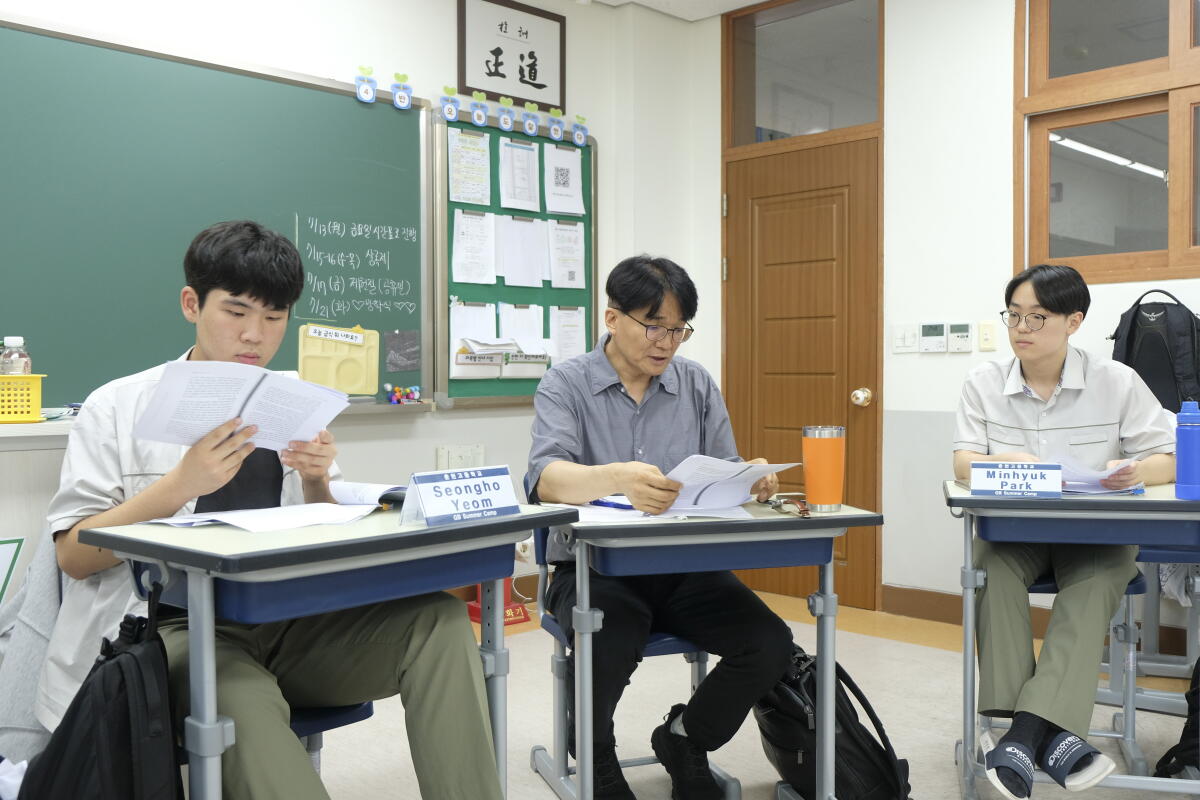
“All of us really feel that this method leaves college students with no time to learn and suppose,” as a result of they’re too busy memorizing info to move assessments,” says Lee Yonghwa, a professor of English language and literature at Incheon Nationwide College, the place he co-founded South Korea’s first “Nice Books” program in 2019.
However now, Lee laments, “Korean college students are even dropping their previous capability to memorize info as a result of they gather info and concepts primarily from A.I.” And if they will’t purpose and suppose independently, he provides, they will’t choose the standard of the outcomes that AI generates for them.
The constraints of their academic system motivates many South Koreans to search for alternate options, from schooling abroad, to academic experiments at residence.
“As somebody who went via this method, I felt these limitations keenly,” Chuncheon Mayor Yook Dong-han stated in an interview at metropolis corridor. “Once I grew to become mayor, I wished to introduce a special sort of schooling and a definite academic philosophy to the town of Chuncheon.”
Chuncheon attracts guests from neighboring Seoul to get pleasure from its mountains, lakes and rivers, and dakgalbi, a neighborhood dish of grilled or stir-fried marinated hen.
Chuncheon’s authorities established an educational partnership with St. John’s School final yr to advertise the “Nice Books” academic mannequin.
There at the moment are 120 school college students and a few 770 youthful college students taking the “Nice Books” program in South Korea, and 40 lecturers in coaching, in keeping with Lee Yonghwa.
Though this system continues to be in its infancy, Yook says it represents a “small however revolutionary achievement — a breakthrough that challenges established practices,” and generated curiosity amongst taking part college students that has exceeded his expectations.
South Korean college students following the “Nice Books” mannequin learn Aristotle, Shakespeare, Euclid, and Korean authors together with Nobel laureate Han Kang.
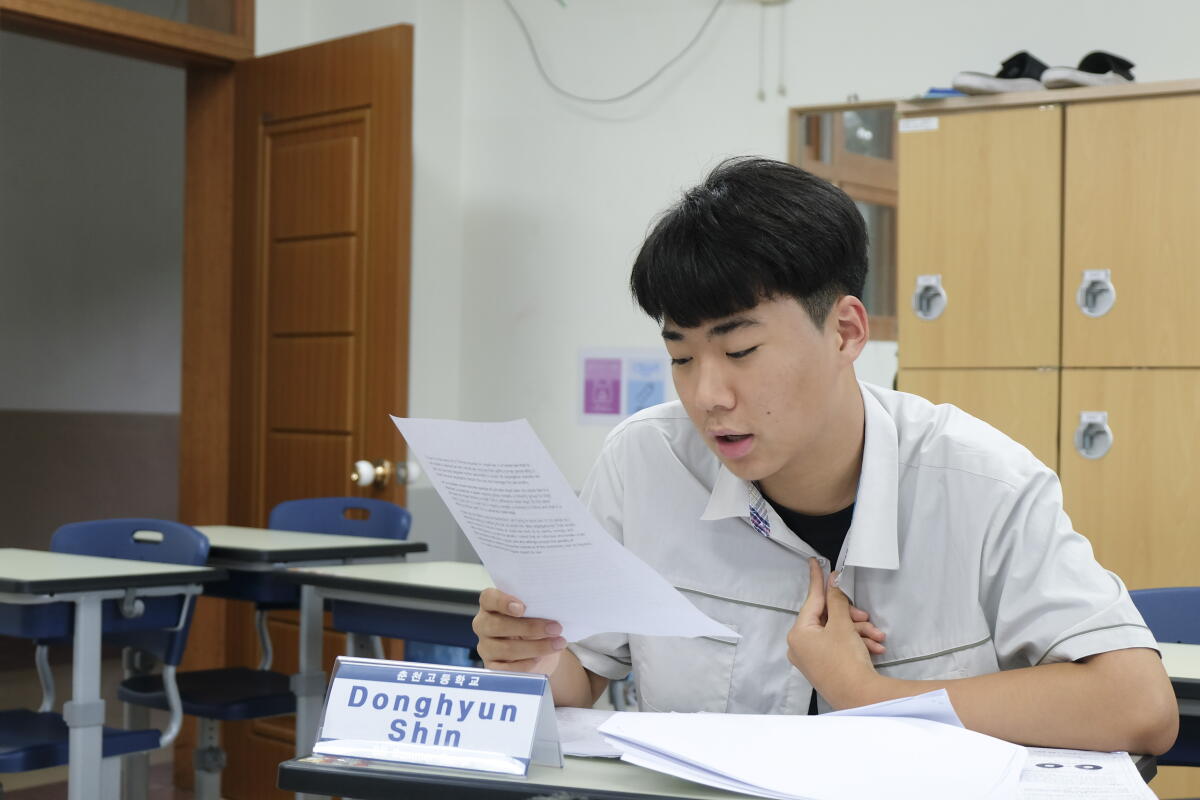
In a single Chuncheon highschool, college students learn Martin Luther King Jr.’s 1963 Letter from Birmingham Jail.
They talk about King’s concepts about what sort of legal guidelines are simply and unjust, and which legal guidelines residents ought to obey or disobey.
Lee Yonghwa says he’s impressed that college students linked King’s letter to their very own nation, similar to in 2024, when residents and lawmakers defeated former President Yoon Suk Yeol’s try and put South Korea beneath martial legislation.
That matches the aim of the “Nice Books” mannequin, through which “every seminar desk actually turns into a miniature republic, the place concepts conflict however folks cooperate,” St. John’s School President J. Walter Sterling wrote final yr in an opinion essay.
By means of civic participation and liberal schooling, he provides, “we quietly sew the material of our democracy…earlier than it unravels past restore.”
NPR’s Se Eun Gong contributed to this report in Chuncheon and Seoul.
Transcript:: [POST-BROADCAST CLARIFICATION Nov. 12, 2026: This story says that the main campus of St. John’s College is in Annapolis, Md. It also has a second, co-equal campus in Santa Fe, N.M.]
AILSA CHANG, HOST:
In developed Asian international locations like Japan and South Korea, younger college students frequently outperform their American counterparts in studying proficiency. The take a look at scores have been on the decline lately, and educators fear that AI might make issues worse. NPR’s Anthony Kuhn studies on how educators in South Korea are responding by importing an academic mannequin from the U.S.
(CROSSTALK)
ANTHONY KUHN, BYLINE: College students play ball at a public elementary faculty playground. It’s about 50 miles east of Seoul within the metropolis of Chuncheon, the place Seoul residents come on weekends to get pleasure from its mountains, rivers and lakes. Final yr, the varsity started utilizing an academic mannequin primarily based on nice books.
UNIDENTIFIED PERSON: (Talking Korean).
KUHN: In a single classroom, college students are discussing Mary Shelley’s novel. “Frankenstein.” The trainer asks, Is the Frankenstein monster human? Pupil Ma Yeonwoo speaks up.
MA YEONWOO: I feel we are able to name him a human being with no soul.
KUHN: The dialogue then turns as to if synthetic intelligence might be thought-about human.
MA: As a result of, like, human invented AI. And AI, like, they’re sensible, however they don’t have creativity.
KUHN: The scholars learn Aristotle, Shakespeare and Korean writer Han Kang. Ma Yeonwoo says he enjoys debating and studying from his friends.
MA: If solely the trainer talks, we are able to have one concept, but when all of us debate collectively, like, we are able to get many concepts collectively.
KUHN: The mannequin comes from St. John’s School, which has its predominant campus in Annapolis, Maryland. St. John’s lecturers don’t lecture. There aren’t any majors or elective programs. St. John’s graduate Lee Yonghwa is a professor of English language and literature at Incheon Nationwide College, the place he co-founded South Korea’s first nice books program in 2019. He says the scholars don’t search solutions from exterior sources just like the web.
LEE YONGHWA: As an alternative, we have interaction in collective inquiry, with books and our personal reasoning capability serving because the one frequent floor and authority. And consequently, college students should study for themselves.
KUHN: It’s a special strategy from schooling in South Korea and far of East Asia, which, Lee says, is extremely aggressive and demanding.
LEE: All of us really feel that this method leaves college students with no time to learn and suppose. As an alternative, it forces them to memorize info all day lengthy for all types of assessments.
KUHN: The intention of memorizing info is to move school entrance exams and get into one of the best universities. Now, Lee says, college students’ rising reliance on AI is weakening even these expertise.
LEE: Korean college students are even dropping their previous capability to memorize info as a result of they gather info and concepts primarily from AI.
KUHN: And if they will’t purpose and suppose independently, he provides, they will’t choose the standard of the outcomes that AI generates for them.
(SOUNDBITE OF STUDENTS PLAYING THE RECORDER)
KUHN: In music class, college students play the recorder. The good books mannequin can’t change South Korea’s test-centered system, however it will probably complement it. Final yr, the town of Chuncheon established an educational partnership with St. John’s School. Yook Dong-han is Chuncheon’s mayor.
YOOK DONG-HAN: (By means of interpreter) I consider this represents a small but revolutionary achievement, a breakthrough that challenges established practices.
KUHN: He says that though it’s simply getting began, college students’ enthusiasm for this system has already exceeded his expectations.
YOOK: (By means of interpreter) I hope that as this initiative spreads, first regionally after which past Chuncheon, it’ll inspire us to mirror on our current schooling system and have interaction in basic rethinking amidst the fast technological developments of immediately’s society.
UNIDENTIFIED SCHOOL STUDENT: An unjust legislation is a code that’s out of concord with the ethical legislation.