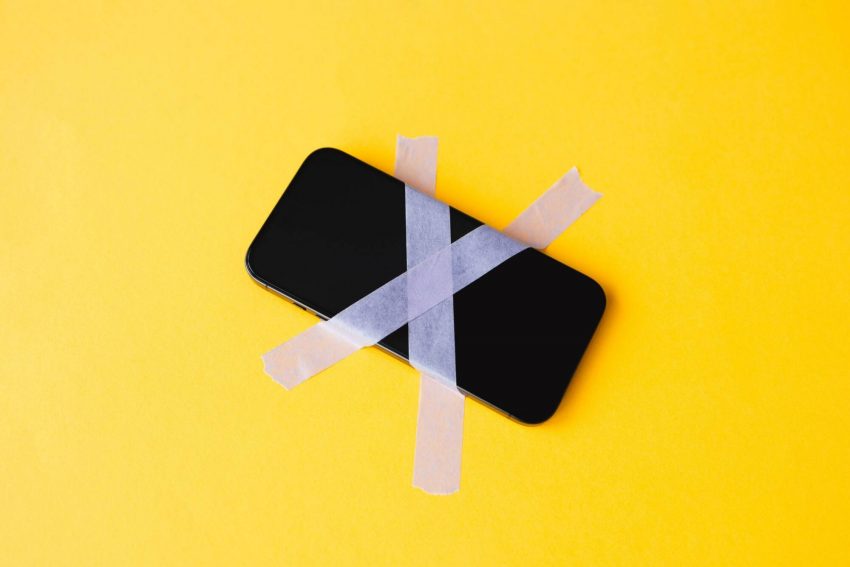
Since 2023, cellphone use through the college day has been banned or restricted in not less than 40 states and the District of Columbia, within the hope that lowering digital distractions would assist college students concentrate on their classes.
So how’s it working?
Final week researchers at Harvard College launched the third main study of cellphone limits in U.S. faculties and, like the 2 earlier than it, it discovered remarkably little educational profit. Media reports trumpeted the examine’s findings of gains in student achievement as proof of actual progress. However learn the tremendous print: College students’ mixed math and studying scores, as measured by MAP exams, rose by solely an additional 0.0087 of a normal deviation.
Readers, I attempt to keep away from speaking about summary statistical items, however on this case, they’re vital as a result of they present simply how teeny-tiny the tutorial positive factors had been. The estimated enchancment is lower than one-hundredth of a normal deviation, a really small shift in scholar efficiency. In graduate college, I used to be taught that even an enchancment of one-tenth of a normal deviation — greater than 10 occasions the dimensions of this impact — is kind of small.
However the Harvard researchers translated that 0.0087 enchancment into one to 2 weeks of extra studying a 12 months. They characterised the positive factors as “modest” and mentioned they might add up over time and assist college students recuperate half of the training losses that amassed between 2013 and 2020, earlier than scholar efficiency took a steeper nosedive through the pandemic.
The tiny achieve was discovered after evaluating scholar achievement in faculties the place college students needed to put their telephones in locked pouches with efficiency in related faculties that didn’t impose such strict bans.
In my interview with Tom Kane, a Harvard economist and lead creator of the report, he made the case that even tiny enhancements matter. He referred to as the pouches, which value solely about $25, a greater “bang for the buck” than tutoring applications that may elevate math or studying expertise by much more, however value 1000’s of {dollars} per scholar.
An earlier national study, launched in April 2026, reached a much less optimistic conclusion. Researchers from Stanford, Duke, the College of Pennsylvania and the College of Michigan discovered little to no educational enchancment in faculties that adopted cellphone pouches. Just like the Harvard researchers, they in contrast faculties that required college students to lock their telephones away with related faculties that didn’t. However in contrast to the Harvard staff, they didn’t have particular person scholar check scores and as an alternative relied on common scores for every college.
The pouches did make a distinction. Cellphone use declined extra in faculties that adopted them, and academics reported that college students had been on their telephones much less throughout class. Suspensions initially elevated as the brand new cellphone guidelines went into impact, however disciplinary incidents subsided after the primary 12 months.
The first of the three studies, launched in October 2025, additionally discovered a really small educational profit, although not almost as small because the Harvard examine. It occurred in a single massive Florida district, the place faculties with increased cellphone use earlier than restrictions noticed common check scores improve by 0.6 of a percentile level greater than the scores of colleges with decrease prior cellphone use. That’s the equal of shifting a scholar from the 50th to not fairly the 51st percentile. To many, that enhance could be hardly noticeable — a rounding error.
On the energy of this quantity, David Figlio, an economist on the College of Rochester and an creator of the Florida examine, declared that the bans had been “serving to youngsters” and that it was a uncommon case in public coverage the place the “information again up the hunches.”
Researchers disagree about that. And their Ivory Tower debate is now happening within the thousandths of a normal deviation.
Tom Dee, a Stanford economist and an creator of the sooner nationwide examine, identified that the Harvard staff’s small constructive findings vanished once they themselves crunched the numbers a unique manner. The Harvard paper reported a good smaller estimate, 0.0068 customary deviations, when researchers used their initially deliberate methodology. That consequence was not statistically vital, which means the researchers couldn’t rule out the likelihood that the tutorial positive factors had been really zero.
Dee additionally famous that the Harvard researchers’ personal check of whether or not their tiny positive factors had been compounding didn’t go statistical muster; they might not set up that the tutorial advantages had been persevering with to develop within the first couple years after a cellphone ban went into impact.
Brendan Bartanen, an affiliate professor of schooling and public coverage on the College of Virginia, publicly criticized his friends. “In any affordable world, the impact sizes listed below are principally zero. This intervention didn’t transfer scholar achievement in any significant manner (it might nonetheless be a very good coverage!),” Bartanen wrote on Bluesky.
“We have to cease doing this as researchers,” he wrote, referring to interpretations that go “past (typically properly past) what our outcomes can really help.” It’s a “pernicious drawback,” he added, that almost all researchers have engaged in.
Different researchers piled on, too. “The impact measurement just isn’t modest,” wrote Candice Odgers, a professor of psychology on the College of California, Irvine, on LinkedIn. “It’s negligible by typical requirements and the reporting of this as a large victory for cellphone bans on youngsters’s instructional outcomes is …properly, unusual.”
“I’m simply apprehensive we are going to declare victory with out really getting a win for youths,” added Odgers.
In response to the criticism, the Harvard analysis staff justified the necessity to modify their methodology due to lacking information. However they agreed that it’s going to take extra time to see if the annual enhancements will certainly add as much as substantial studying positive factors. They stood by their assertion that small positive factors for college kids nonetheless rely.
“We don’t suppose our interpretation goes past what our outcomes can help,” the authors of the Harvard examine wrote me by electronic mail.
Even Stanford’s Dee, whose examine discovered primarily no educational advantages from cellphone bans, needs the bans to proceed. He informed me he nonetheless finds the speculation that cellphones are distracting and hurt youngsters’s consideration spans “compelling.” He hopes that as faculties get higher at implementing bans, college students would possibly see bigger advantages. So long as college students can nonetheless chat by means of Google’s instructional apps or can entry TikTok and Instagram on private laptops and tablets they carry to highschool, the classroom distractions stay.
One other chance is that the tutorial hurt from cellphones isn’t primarily pushed by their use through the college day. It could be all the opposite hours college students spend scrolling by means of movies, messaging and enjoying video games that cut back their consideration spans, undermine their motivation to learn and lower into their sleep.
Each Dee of Stanford and Kane of Harvard referred to as upon social media corporations to share their information with researchers to allow them to higher examine whether or not cellphone use is harming educational achievement, and which actions and hours matter most.
“The social media platforms, they understand how a lot time youngsters are spending on Snapchat or watching YouTube or TikTok through the day and the evening,” Kane mentioned. “We might reply these questions on in-school and out-of-school use if we had the information.”
For now, many researchers are urging faculties to stay with the bans anyway. However there’s a distinction between believing a coverage is value persevering with to attempt to claiming that the proof reveals it really works.
Contact workers author Jill Barshay at 212-678-3595, jillbarshay.35 on Sign, or [email protected].
This story about school cellphone bans was produced by The Hechinger Report, a nonprofit, unbiased information group that covers schooling. Join Proof Points and different Hechinger newsletters.